Lip care · 7 min read
How to make natural lip balm at home (the recipe we started with)
By Aarti Solanki · Updated
The short answer
To make natural lip balm at home, melt one part plant wax, one part butter and two parts liquid oil in a bowl over simmering water, stir until clear, take it off the heat, add vitamin E, then pour into tins and leave to set for an hour. Roughly 5 g carnauba or candelilla wax, 10 g shea or cocoa butter and 20 g jojoba or sweet almond oil fills about three 15 ml tins.
- The working ratio is 1 part wax : 1 part butter : 2 parts liquid oil by weight.
- Carnauba and candelilla wax keep it vegan; carnauba is harder, so use slightly less.
- Add vitamin E off the heat to help keep the oils fresh.
- Test one teaspoon on a cold plate before you pour the whole batch.
- Homemade balm has no preservative, so keep it dry, clean and use within six months.
What you need
Everything here is available from a health food shop or online. Use digital scales rather than spoons: lip balm is a ratio, not a recipe, and grams are the only way to keep it consistent.
- 5 g plant wax: carnauba or candelilla (or beeswax if you are not making it vegan)
- 10 g butter: shea, cocoa or kokum
- 20 g liquid oil: jojoba, sweet almond or fractionated coconut
- A few drops of vitamin E (tocopherol)
- Optional: a small amount of skin-safe flavour or essential oil
- A heatproof bowl, a pan, a spatula and clean lip balm tins
The method, step by step
The whole thing takes about twenty minutes plus setting time. Keep water away from the mixture: a single drop introduces the risk of mould.
- 1. Sterilise your tins and let them dry completely.
- 2. Weigh the wax, butter and oil into a heatproof bowl.
- 3. Set the bowl over a pan of simmering water and stir until fully melted and clear.
- 4. Remove from the heat and stir in the vitamin E, and any flavour, off the heat.
- 5. Drop a teaspoon onto a cold plate and let it set for two minutes to check the firmness.
- 6. Pour into tins, leave undisturbed for an hour, then lid and label with the date.
Getting the texture right
Too hard and it drags across the lip. Too soft and it turns to soup in a coat pocket. The cold-plate test is what saves the batch, because you can still adjust the pan.
- Too hard: remelt and add oil 2 g at a time
- Too soft: remelt and add wax 1 g at a time
- Grainy: shea has crystallised; remelt fully and cool it faster
- Sweating little beads: it cooled too slowly in a warm room
What to leave out
Menthol, camphor and phenol give a cooling tingle that feels active but can irritate already-split lips. Strong fragrance oils are a common cause of contact irritation, particularly on children. Do not use citrus essential oils on lips going out into the sun, and never use water, milk or aloe gel in an unpreserved balm.
Making it with children
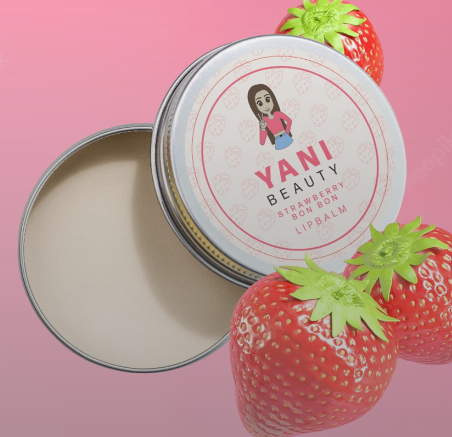
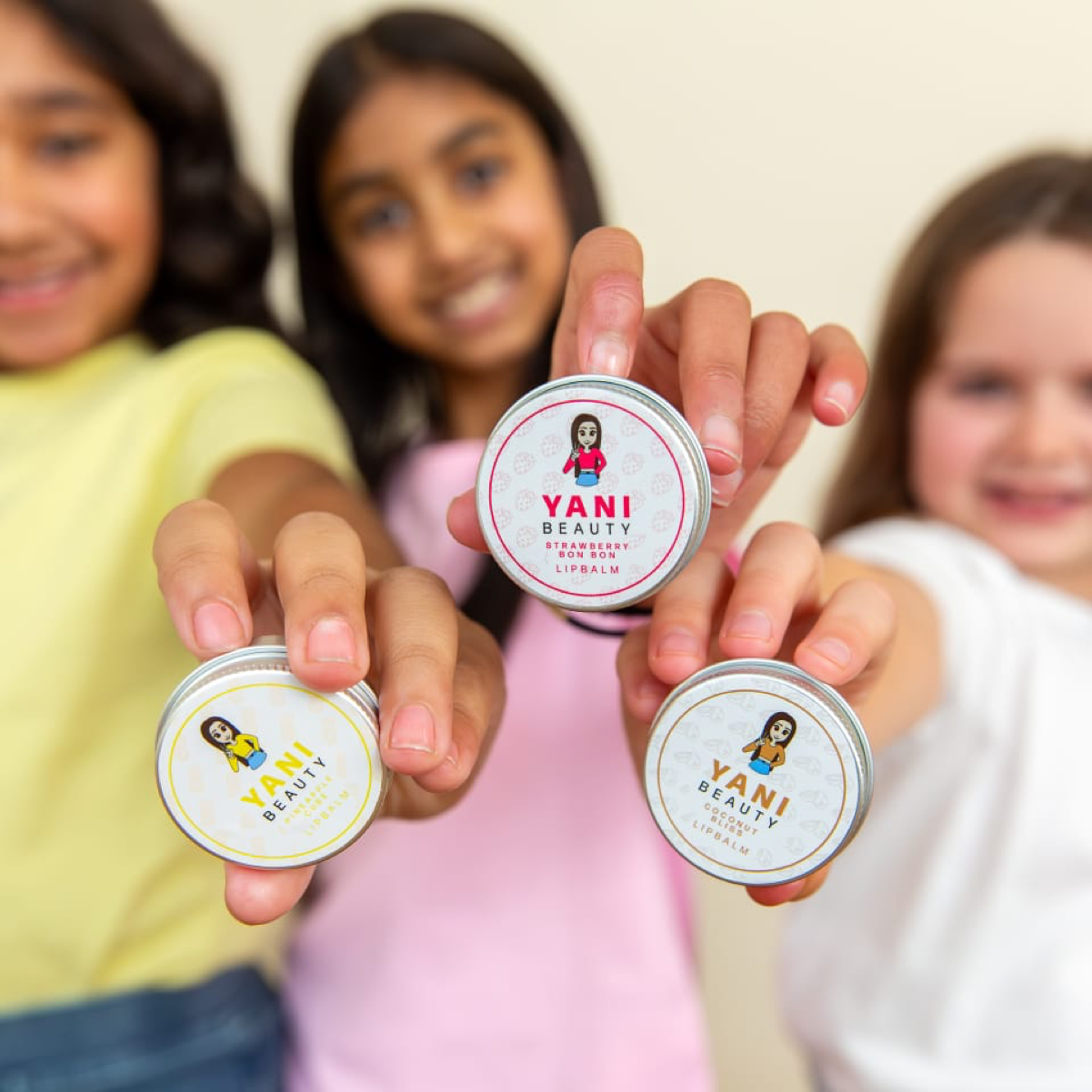
This is exactly how Yani Beauty started. Yana was five and in hospital, her lips were cracked and bleeding, and nothing on the shelf helped. She asked her mum whether they could make their own, and the first batch was so deliberately plain that we still sell it under that name: Plain Jane, kokum, shea and cocoa butters with jojoba and sweet almond oil, sealed with carnauba wax, no fragrance.
Children can weigh, stir, choose flavours and label tins. An adult handles the hot bowl and the pouring. It is a genuinely good rainy-afternoon project, and it teaches ingredient reading in a way no lesson does.
Safety, shelf life and giving it away
Homemade balm keeps about six months if it stays dry and out of direct sun. If you plan to sell or give it away widely in the UK, cosmetics law applies: you need a Cosmetic Product Safety Report, a responsible person, UK product notification and correct labelling. That is the point where most people would rather buy handmade than scale it themselves, and it is fine to stop at making it for your own family.
Questions people ask
What is the ratio for homemade lip balm?
One part wax, one part solid butter and two parts liquid oil by weight. Around 5 g wax, 10 g butter and 20 g oil fills three 15 ml tins.
Can you make lip balm without beeswax?
Yes. Carnauba or candelilla wax both work and keep the balm vegan. Carnauba is harder than beeswax, so use slightly less or add a little more oil.
How long does homemade lip balm last?
About six months. It contains no preservative, so keep water out of it, use clean fingers or a spatula, and store it away from heat and sunlight.
Why is my homemade lip balm grainy?
Shea butter has crystallised. Remelt the batch fully, hold it melted for a few minutes, then cool it quickly in the fridge to set the crystals evenly.